
For months, residents of the Kelowna Heritage Area, formally known as the Abbott Street Heritage Conservation Area, have been asking a seemingly simple question:
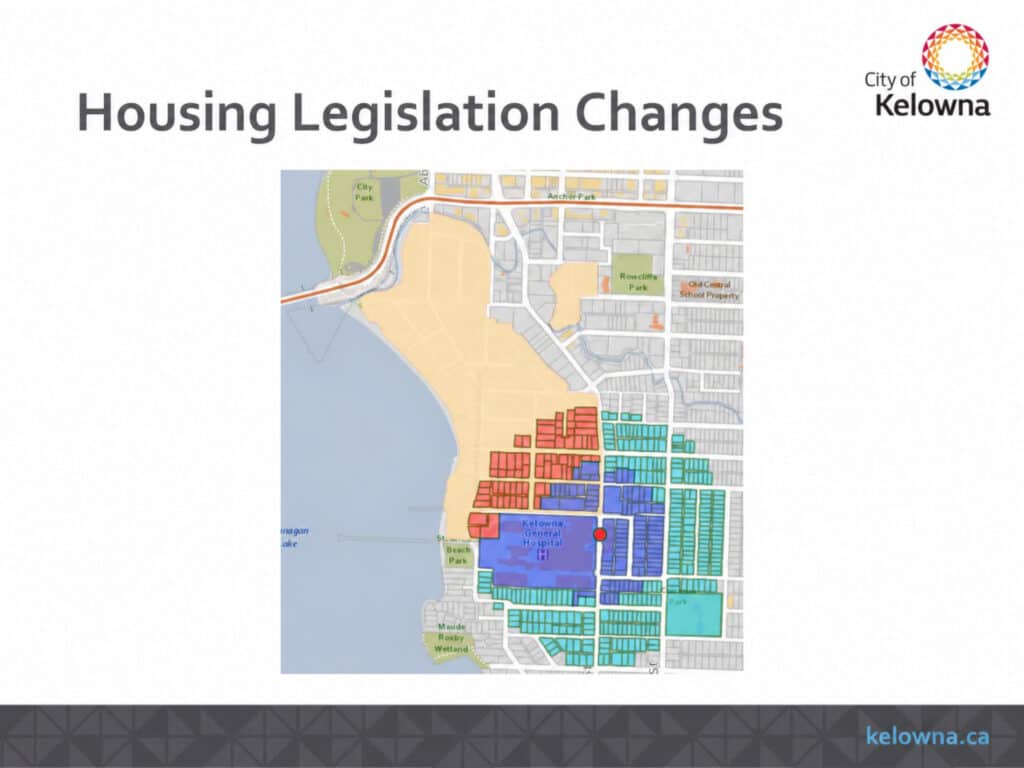
How can a provincially mandated Transit-Oriented Area requiring substantially greater development coexist with a Heritage Conservation Area created specifically to protect neighbourhood character, scale and streetscape?
We now have another important piece of that answer.
In an October response issued on behalf of Kelowna City Council, Mayor Tom Dyas confirmed that the Province is not considering an amendment to the Kelowna General Hospital Transit-Oriented Area designation to exclude the Abbott Street Heritage Conservation Area.
But the same letter confirms something equally important:
The Heritage Conservation Area has not disappeared, and its heritage protections remain in effect.
That distinction will now become central to what happens next.
How We Got Here
This latest correspondence is part of a much longer conversation between residents, the City and the Province.
On June 15, 2026, Kelowna City Council unanimously supported a resolution asking the Province to exclude the Abbott Street Heritage Conservation Area from the Kelowna General Hospital Transit-Oriented Area.
Mayor Tom Dyas subsequently wrote to provincial Ministers Mike Farnworth and Christine Boyle on June 30 on behalf of Council.
In that letter, the Mayor acknowledged that the overlap between the TOA and HCA was creating “policy uncertainty and tension” between heritage preservation and future growth.
He asked the Province to amend the KGH TOA designation to exclude the Abbott Street Heritage Conservation Area.
We reported on that important development earlier this summer in our post “City Council Responds.”
The Community Asked Council to Take Four Further Actions
After the City’s request to the Province, residents continued to seek clarification about what Kelowna itself could do to protect the HCA.
On August 27, a formal community letter was sent to Mayor Dyas and Council asking the City to take four specific steps: clarify the OCP so that heritage protections took precedence in the overlap area, remove TOA-related language from the HCA portions of the OCP, return the affected properties to RU1 zoning, and remove TOA-related language from the Heritage Conservation Area Guidelines.
That letter formed the basis of our “Write to Council About Preserving the Abbott Street Heritage Conservation Area” campaign.
We now have Council’s response.
The Province Will Not Remove the HCA From the TOA
Mayor Dyas’s response confirms the Province’s position:
“The Province has since advised the City that it is not considering an amendment to the Kelowna General Hospital TOA designation.”
Read the full correspondence: Mayor Tom Dyas’s October 2, 2026 Response Letter
The City also states that provincial legislation establishes minimum density and building-height permissions within Transit-Oriented Areas and limits the City’s ability to use ordinary zoning powers to reduce those permissions.
For that reason, City staff do not recommend the OCP, zoning and HCA amendments requested in the community letter.
In other words, the City’s position is now clear: it does not believe it can simply rezone the affected portion of the HCA in a way that eliminates the provincially prescribed TOA minimums.
That answers one question. It does not answer all of them.
Heritage Protection Still Applies
The City’s response goes on to emphasize that the Transit-Oriented Area designation does not eliminate the Abbott Street Heritage Conservation Area or the City’s heritage-conservation responsibilities.
Mayor Dyas’s letter specifically confirms:
“The Province has specifically confirmed that heritage conservation protections remain in effect and that heritage considerations may continue to inform how individual development proposals are evaluated.”
This is consistent with earlier correspondence from the Province.
Housing and Municipal Affairs Minister Christine Boyle previously confirmed that the TOA designation does not override the existing Abbott Street HCA development guidelines and that municipal heritage-conservation protections remain in force.
Her letter also identified circumstances in which heritage tools can limit development within a TOA, including formally designated heritage properties and Heritage Revitalization Agreements, and confirmed that municipalities may refuse rezonings for reasons other than density, including the preservation of heritage buildings or features.
So the discussion has become more specific. The question is no longer simply:
Can the HCA be removed from the TOA?
The Province’s answer appears to be no. The more important question now is:
What will Kelowna’s remaining heritage protections actually protect?
Six Storeys Is Not Automatically the Outcome
There is another important statement in the City’s response that should not be overlooked.
The City says that being located within the TOA does not mean every property will automatically redevelop to the maximum permitted height or density.
Future applications will still be evaluated against applicable City bylaws, policies, heritage guidelines and provincial requirements.
That makes the City’s implementation of its heritage policies extremely important.
What happens when a proposal is technically permitted to reach six storeys under the TOA framework but conflicts with the scale, massing, landscape or streetscape objectives of the Heritage Conservation Area?
How much discretion does the Heritage Alteration Permit process provide?
How will mature trees, landscaped setbacks and the established rhythm of the streetscape be protected?
How will new development be required to respond to neighbouring heritage and character properties?
And where existing heritage tools are insufficient, what additional tools could Council lawfully adopt?
These are no longer hypothetical questions.
Development pressure within the affected portion of the HCA is already occurring.
This Is Not the End of the Conversation
The Province’s refusal to remove the Abbott Street HCA from the KGH Transit-Oriented Area is disappointing to those who supported Council’s exemption request.
But it does not mean the Heritage Conservation Area has ceased to matter. Quite the opposite.
Both the Province and the City continue to state that heritage protections remain in effect. The challenge now is ensuring those protections have meaningful results on the ground.
For nearly three decades, the Abbott Street Heritage Conservation Area has been managed not simply as a collection of individual historic houses, but as a neighbourhood whose heritage value comes from its buildings, mature trees, gardens, setbacks, streetscape and human scale.
The introduction of TOA density does not erase those values.
It makes the responsibility to define and defend them more important.
As Kelowna’s new Council begins its term, we hope this becomes the next stage of the conversation: not whether Kelowna should grow, and not whether provincial housing legislation exists, but how the City will use every heritage tool still available to ensure that growth within Kelowna’s only established Heritage Conservation Area respects the qualities the area was created to conserve.
The exemption question may have been answered. The heritage question has not.