


Council meeting June 2026
In June 2026, the Kelowna City Council held a significant meeting to address various pressing urban planning issues, including the integration of heritage conservation within modern development frameworks. This meeting was marked by passionate discussions and a clear commitment from council members to find a balanced approach that respects both historical significance and the need for contemporary housing solutions.
The planning challenges stem from the growing demand for housing in Kelowna, as the city continues to attract new residents and businesses. The overlap between the Abbott Street Heritage Conservation Area and the Kelowna General Hospital Transit-Oriented Area (TOA) designation raises critical concerns about how development can proceed without compromising the area’s historical integrity.
Councillor Cannan pointed out that the rich history of Abbott Street is not only valuable to its current residents but also contributes to the overall cultural fabric of Kelowna. By preserving this area, the council aims to maintain a sense of identity and heritage that future generations can appreciate.
The community’s presence at the meeting underscored the importance of public engagement in local governance. Supporters of the resolution highlighted personal stories about living in the area and the unique architectural features that define Abbott Street. These narratives demonstrate how heritage conservation goes beyond mere preservation; it fosters community pride and belonging.
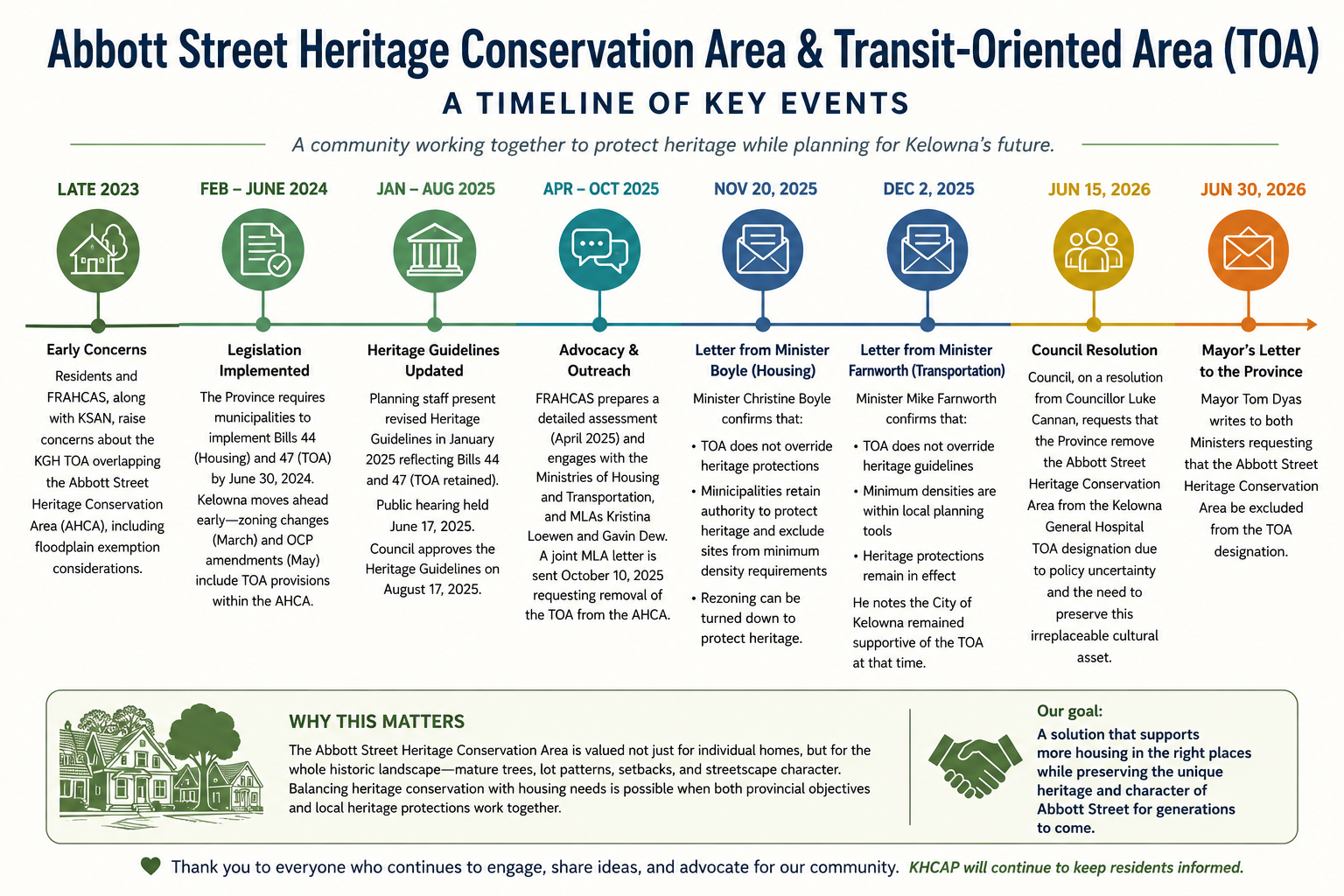
Kelowna City Council had formally acknowledged the planning challenges created by the overlap.
In discussing the significance of the Heritage Conservation Area, it is essential to acknowledge the role of community spaces, public parks, and the overall aesthetic coherence of the neighborhood. The integration of natural landscapes with historical architecture creates a vibrant environment that enhances the quality of life for residents and visitors alike.
Mayor Dyas’s proactive correspondence with the Province reflects a broader concern regarding urban planning policies. The dialogue between local and provincial authorities is crucial as they navigate the complexities of land use and historical preservation in the face of increasing development pressures.
Councillor Luke Cannan introduced a resolution requesting that the Province remove the Abbott Street Heritage Conservation Area from the Kelowna General Hospital Transit-Oriented Area designation. The resolution recognized that while the Province controls TOA boundaries, the City has an ongoing responsibility to preserve the Heritage Conservation Area’s unique historic character.
Residents have voiced a desire for more comprehensive discussions about how to harmonize the demands of housing development with the preservation of historical sites. Community forums and workshops could serve as platforms for these essential conversations, ensuring that a diverse range of voices is heard.
The question of protecting the Abbott Street Heritage Conservation Area while implementing TOA legislation requires innovative solutions. One possible approach is to explore zoning adjustments that allow for higher density in certain parts of the city while safeguarding areas of historical significance.
Moreover, the conversation around housing should include considerations for affordable housing initiatives. Balancing the preservation of heritage sites with the need for diverse housing options is vital for fostering an inclusive community that meets the needs of all residents.
As Kelowna embraces higher-density development, it is important to recognize that heritage conservation does not equate to stagnation. Instead, thoughtful integration of new buildings with existing heritage structures can lead to dynamic neighborhoods that celebrate both history and modernity.
Local businesses also benefit from a balanced approach; heritage conservation can enhance tourism, drawing visitors interested in the architectural and cultural history of the area. By promoting such attractions, the city can support both economic growth and heritage preservation.
Many individuals from the neighbourhood were present at the meeting to show support for the cause.
Finding common ground will require collaboration among various stakeholders, including city planners, heritage advocates, developers, and the residents themselves. Engaging in dialogue and exchanging ideas will be critical in crafting a comprehensive policy that addresses housing needs while respecting cultural heritage.
As we look ahead, the preservation of the Abbott Street Heritage Conservation Area can serve as a model for other communities grappling with similar challenges. By prioritizing heritage conservation, Kelowna can demonstrate that growth and preservation are not mutually exclusive but can instead coexist harmoniously.
The vibrant character of Abbott Street illustrates the stories of those who came before, and it remains a vital part of the city’s identity. As new developments arise, it is crucial to ensure they are designed with sensitivity to the neighborhood’s historical context, enhancing rather than detracting from its charm.
Moving forward, the city can harness the input of its residents to shape a future that honors its past while addressing modern needs. The dedication shown by citizens and officials alike is an encouraging sign that Kelowna values its heritage and is committed to finding solutions that benefit all.
Join the movement to protect our heritage! Take a moment to sign our online petition and be part of the conversation that shapes the future of Abbott Street.
The motion emphasized that the value of the Heritage Conservation Area extends far beyond individual heritage homes. Its significance comes from the relationship between historic buildings, mature trees, established landscaping, lot patterns, and the neighbourhood’s distinctive streetscape. These are qualities that cannot easily be recreated once lost.
Following Council’s resolution, Mayor Tom Dyas wrote to the Province requesting that the Abbott Street Heritage Conservation Area be excluded from the TOA designation. In his letter, the Mayor acknowledged that the overlap creates policy uncertainty and makes it difficult to balance heritage conservation with provincial housing requirements.
Over the past two years, residents, community organizations, elected officials, and the Province have all weighed in on one important question:
How should the Abbott Street Heritage Conservation Area be protected while implementing British Columbia’s Transit-Oriented Area (TOA) legislation?
This conversation has never been about opposing housing.
Kelowna has embraced higher-density development in many appropriate locations throughout the city. The question raised by residents, community organizations, and now City Council is whether a provincially designated Heritage Conservation Area should be treated differently because of its unique cultural, historical, and environmental value.
The Province has consistently recognized the importance of municipal heritage protections. The City has now formally requested that the Heritage Conservation Area be removed from the TOA designation.
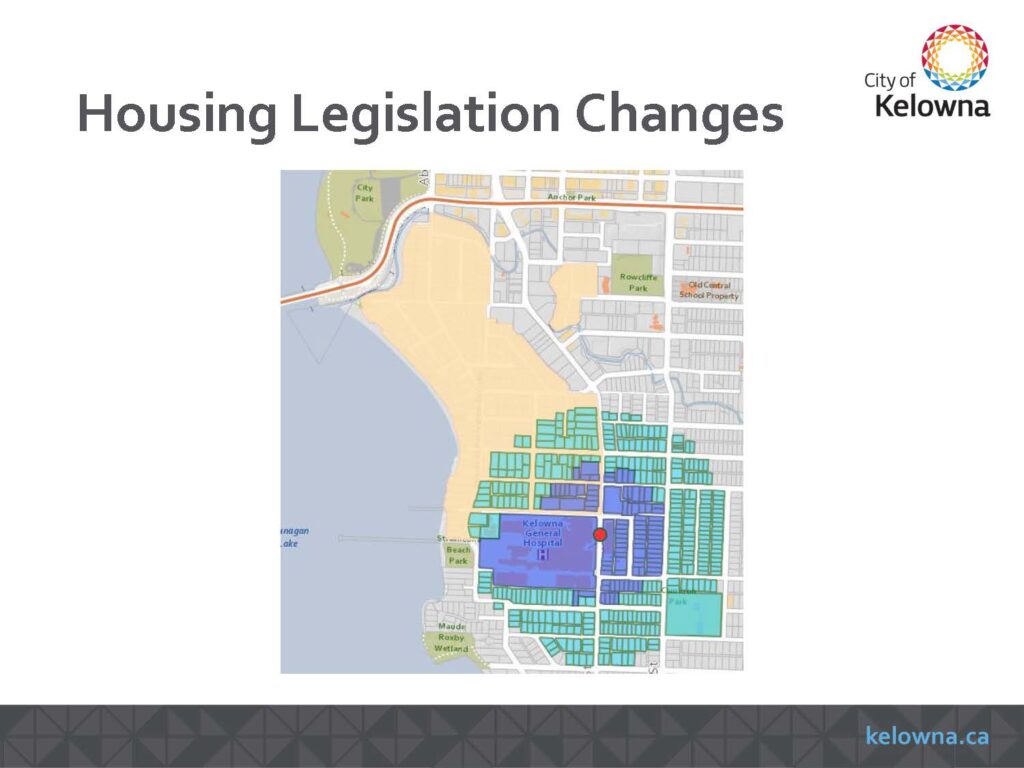
As discussions continue, the hope is that a solution can be found that supports both the Province’s housing objectives and the long-term preservation of one of Kelowna’s most treasured historic neighbourhoods.
Looking Ahead
The Abbott Street Heritage Conservation Area represents more than a collection of historic houses. It is a living neighbourhood that reflects Kelowna’s history, identity, and sense of place.
Protecting that character while thoughtfully planning for future growth is a challenge shared by communities across British Columbia. The conversations taking place today will help shape not only the future of Abbott Street, but also how heritage conservation and housing policy work together in the years ahead.
Your voice matters! You can help by siging our online petition – it takes less than a minute (no donation required).